

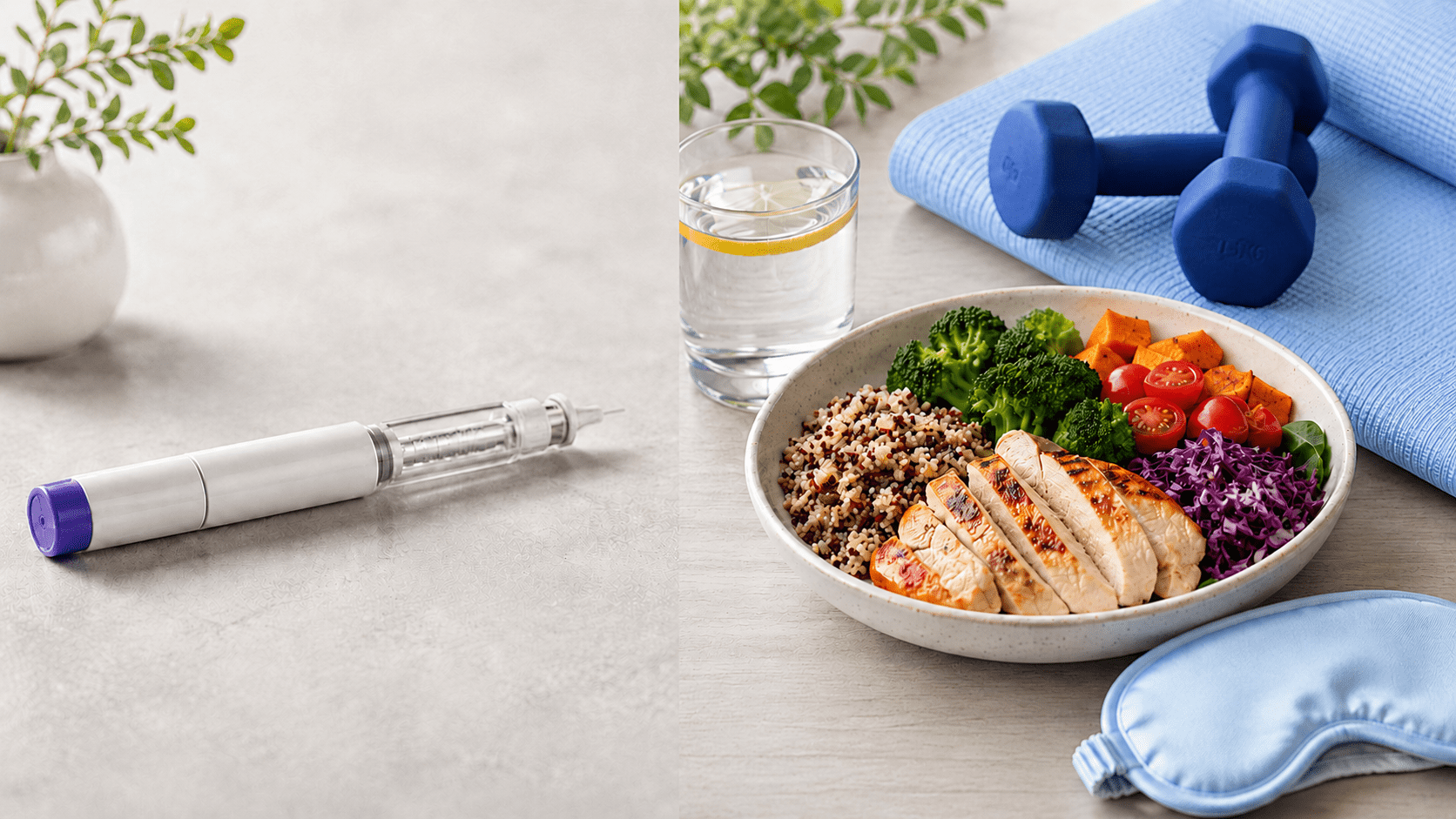
You hear about it everywhere. It is a big boom: celebrities and people on social media are losing weight with these “miracle” GLP-1 injections, and someone you haven’t seen for a while is suddenly smaller than ever.
Most people who want to lose weight are now trying to find out if they can have that magic too, especially when they hear that it doesn’t involve anything else — no exercise, no change in diet, just take it and in no time your weight starts going down.
This is where I want you to pause and think for a moment if you’re considering getting it.
“ Can you explain how it really works and what happens if you stop taking it? ”
Not really?
And this is the first problem. People want it, but many don’t have a clue what it actually is, how it works, or whether it is truly the right thing for them. And not only that — young girls with a BMI below 30 are now asking their GPs if they can get it too.
So let’s get some knowledge first, and then you can let me know in the comments what you think.
First, we are talking here about GLP-1 weight-loss injections. For weight loss in the UK, the three most commonly discussed prescription injections are Wegovy / semaglutide, Saxenda / liraglutide, and Mounjaro / tirzepatide. You may also hear people talking about Ozempic. It is worth knowing that Mounjaro is slightly different because it acts on both GIP and GLP-1 receptors, but people often talk about it under the same “GLP-1 weight-loss injection” umbrella.
But what actually is GLP-1?
Why is everyone suddenly talking about it?
And, most importantly, where do healthy habits, strength training, sleep, stress and nutrition fit into the picture?
Let’s break it down in simple language.
What Is GLP-1?
GLP-1 stands for glucagon-like peptide-1. Catchy, I know.
It’s a hormone made in your gut, specifically released from cells in the small intestine when you eat. Think of it as one of your body’s “I’ve eaten now, you can relax” messengers.
GLP-1 has several important jobs:
- It stimulates insulin release, but only when glucose is present.
- It reduces glucagon, which is a hormone that raises blood sugar.
- It slows gastric emptying, so food leaves your stomach more slowly.
- It acts on the brain to reduce appetite and increase satiety.
In short: GLP-1 helps regulate blood sugar and appetite. It’s part of your body’s beautifully orchestrated system for managing energy.
How Does It Work?
When you eat, GLP-1 is released into the bloodstream. It travels to:
The brain, where it signals fullness. This reduces appetite and cravings.
The pancreas, where it encourages insulin secretion in response to rising blood glucose.
The stomach, where it slows down how quickly food empties into the small intestine.
This means:
- More stable blood sugar
- Longer-lasting fullness
The result? Improved blood sugar control and reduced calorie intake.
The challenge is that natural GLP-1 doesn’t hang around for long — it’s broken down within minutes. This is where medications come in.
When Are GLP-1 Medications Prescribed?
GLP-1 receptor agonists are synthetic medications that mimic the action of natural GLP-1, but they last much longer in the body.
These medications were originally developed for type 2 diabetes, but some are now also prescribed for weight management in people with obesity or weight-related health conditions.
These medications may be prescribed for:
- Type 2 diabetes
- Weight management in people with obesity or weight-related health conditions
- Insulin resistance and metabolic health support, where clinically appropriate
They work by activating hormone receptors that influence appetite, fullness, blood sugar control and digestion.
For some people, these medications can be genuinely life-changing and should always go alongside a healthy lifestyle management plan. Why?
GLP-1 medications can be incredibly helpful tools, but they do not fix the whole underlying lifestyle picture on their own.
If someone comes to me for PT and they are already taking a GLP-1 medication, or they are considering it, I am not here to judge them. I am here to support their body alongside it and help them come off it. For weight loss, GLP-1 should only be a tool for some time, not part of a forever lifestyle.
Because either way, I want them to become metabolically stronger, not weaker.
This is often an under-noted implication of GLP-1 meds — only 60% of mass lost will be fat; at least 40% will be lean mass, such as muscle and bone, which then progressively makes us less metabolically efficient. This is why osteoporosis and hair loss are noted as significant side effects along nausea, vomiting, diarrhoea, constipation, abdominal pain, discomfort, headaches, fatigue and low blood sugar in some cases. Rapid fat gain is an issue if someone comes off GLP-1s without having invested in building muscle and changing their dietary habits whilst using them.
Not because the medication is “bad”, but because the foundations were never built.
And yet…
As with anything in biology, it is never just about one hormone.
Supporting GLP-1 Naturally
Here is where I lean in and ask:
Why might someone’s appetite, blood sugar and fullness signals not be working well in the first place?
From a health and lifestyle perspective, we need to look at the whole picture:
- Insulin resistance
- Chronic inflammation
- Ultra-processed food
- Poor gut health
- Gut microbiome imbalance
- Chronic stress
- Poor sleep
- Sedentary lifestyle
- Blood sugar ups and downs
- Low muscle mass
Can We Support Our Own GLP-1 Naturally?
We cannot copy pharmaceutical-strength effects with food and lifestyle alone, but we can support the body’s natural appetite, blood sugar and fullness signals and you can not only loose weight but loose body fat and build lean tone, strong and functional body.
Here is how, or if you need exact plan get our 21 Drop Zone Club (go to our workshops and you will find it there) if you get stuck or need more help, sign up for one month PT with me to help you step by step on your journey.
Prioritise Protein
Protein stimulates GLP-1 release and improves satiety. It helps stimulate fullness hormones, supports muscle maintenance and helps with appetite control.
Aim for a good source of protein at each meal. For many people, this may be around 20–40g per meal, depending on body size, age, goals and activity level. (see article ultimate guide to exercise, protein calculation is there)
Good options include:
- Eggs
- Greek yoghurt
- Fish
- Chicken
- Turkey
- Lean meat
- Tofu
- Tempeh
- Cottage cheese
- Beans and lentils
- Protein powders, when useful
Protein becomes even more important during weight loss because your body needs support to protect muscle.
Feed the Microbiome
Your gut bacteria play an important role in metabolism, digestion and appetite signalling.
Certain gut bacteria produce short-chain fatty acids, such as butyrate, which may support better metabolic signalling and natural GLP-1 release. See our article about gut health.
A diverse microbiome supports better communication between the gut, brain and metabolism.
Balance Blood Sugar
Stable blood sugar helps reduce stress on the pancreas and can improve insulin sensitivity.
Think simple basics:
- Protein at every meal
- Fibre at every meal
- Vegetables first where possible
- Avoid “naked carbs” on their own
- Eat regular balanced meals
- Allow around 3.5–4 hours between meals if appropriate for you
- Aim for a natural overnight gap of around 12 hours between dinner and breakfast, if this suits your body and lifestyle
This does not need to be extreme. It just needs to be consistent. More in the next article about sugars.
Strength Train
This is the big one.
Muscle is metabolically protective. It improves insulin sensitivity, supports blood sugar control, protects joints, supports bones and helps you stay strong as you age.
If you are losing weight, especially quickly, strength training is not optional in my eyes. It is essential.
Two to three sessions per week can make a profound difference, especially when you progressively challenge your body.
And no, it does not mean you need to become a bodybuilder.
It means you need to tell your body:
“Keep this muscle. I need it.”
Sleep
Poor sleep affects appetite hormones, increases hunger and cravings, and can worsen insulin resistance.
When you are tired, your body often looks for quick energy. That usually means sugar, snacks and grazing.
Aim for seven to nine hours where possible, but also look at sleep quality:
- Are you waking often?
- Are you scrolling late at night?
- Are you eating too late?
- Are you stressed before bed?
- Are you breathing well during sleep or are you over-breathing= snoring?
Sleep is not laziness. Sleep is metabolic medicine.
Manage Stress
Chronic stress and high cortisol can disrupt blood sugar, appetite, digestion and cravings.
We cannot remove all stress from life, but we can help the body handle it better and rebalance.
This is where simple nervous system tools matter:
- Breathwork
- Walking outdoors
- Strength training
- Time in nature
- Good sleep habits
- Calming evening routines
- Realistic expectations
- Learning to say no
And yes, being kinder to yourself too.
A stressed body is not always a body that wants to let go of weight easily.
And Finally
What do you think? Do you see now, why NHS and UK guidance describes these medicines as licensed treatments for specific medical conditions and not as casual weight loss products? And why it needs to be prescribed by doctors — not because it is free through the NHS, but because it needs to go with other support.
0 Comments