

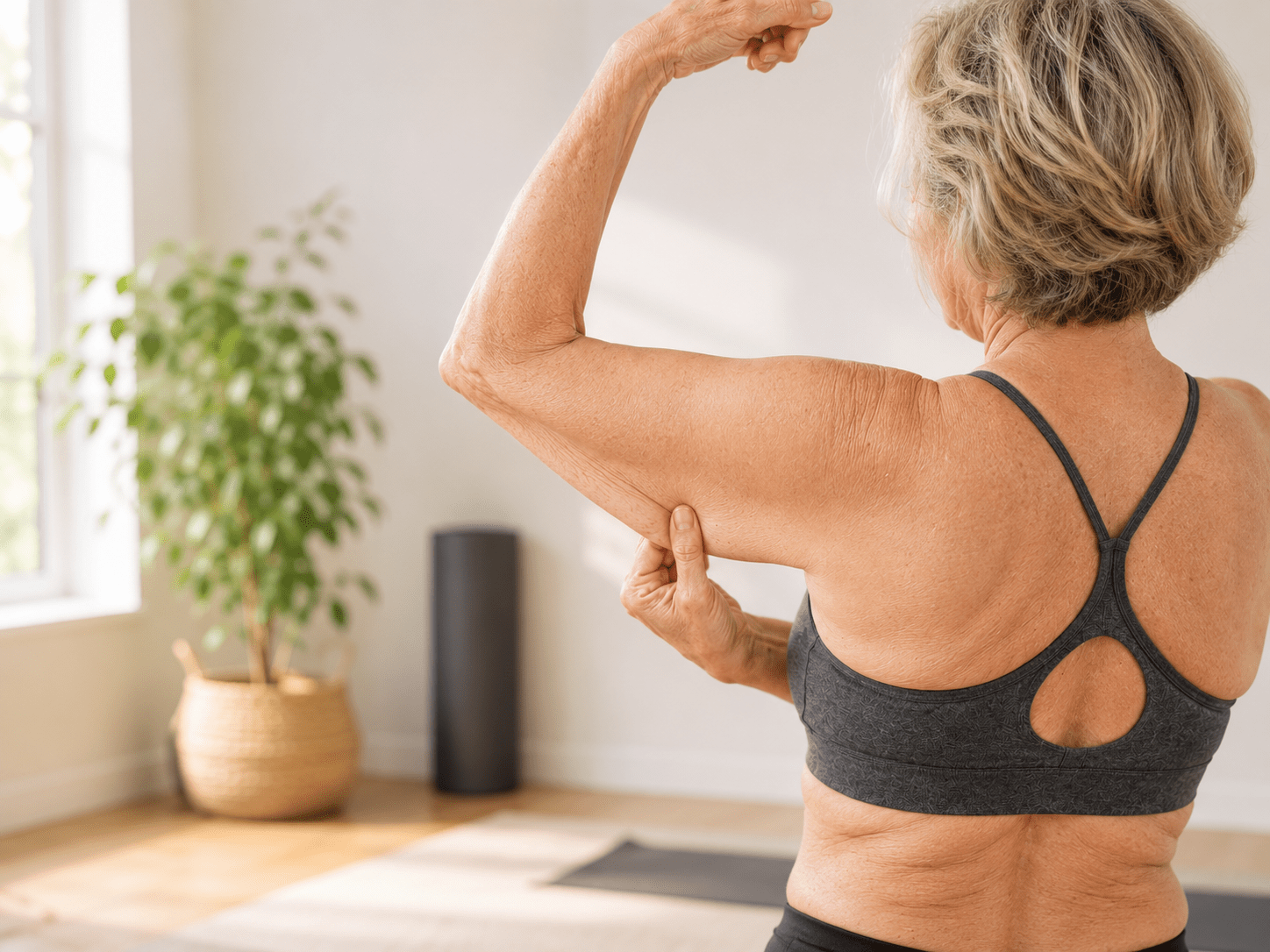
I get this question all the time:
“How can I get rid of my stubborn belly fat, and what can I do about my wings?”
Midlife brings genuine changes in hormones, muscle, fat distribution, skin and metabolism. Once we understand what is happening, we can stop punishing the body and start giving it what it needs.
Why Does Belly Fat Become More Noticeable in Midlife?
As oestrogen levels fall during perimenopause and menopause, women tend to store more fat around the abdomen rather than predominantly around the hips and thighs. Ageing can also bring a gradual reduction in muscle mass and daily energy expenditure. Together, these changes can alter your body shape even when the number on the scales has barely moved.
This abdominal fat can include two different types.
Subcutaneous fat sits directly underneath the skin. It is the softer fat that you can pinch.
Visceral fat sits deeper inside the abdomen, around the internal organs.
However, not every larger-looking tummy is caused entirely by fat.
The appearance of your abdomen can also be affected by:
- Bloating or constipation
- Poor posture
- Reduced strength in the deep abdominal muscles
- A weak or poorly coordinated pelvic floor
- Diastasis recti, or separation of the abdominal muscles
- Digestive problems
- The way you breathe and manage pressure through your core
This is why simply eating less and performing hundreds of sit-ups may not solve the problem.
What Causes “Wings” or Flabby Upper Arms?
What many women call “wings” is usually a combination of three things:
Less muscle underneath the arm.
Without regular resistance training, we gradually lose muscle as we age. This makes the arms look softer and less defined.
A layer of body fat.
Some women naturally store more subcutaneous fat around their upper arms. Where you store fat and where you lose it first are strongly influenced by genetics and hormones.
Changes in the skin.
Falling oestrogen levels are associated with reduced collagen production, thinner skin and decreased elasticity. The skin may therefore become looser, even in women who are not carrying a large amount of excess fat.
This is important because fat, muscle and loose skin are not the same thing—and they do not respond to the same treatment.
Can You Target Belly Fat or Arm Fat?
Unfortunately, we cannot instruct the body to remove fat from one chosen area.
Abdominal exercises can strengthen your core, but they do not selectively burn the fat covering your stomach. In one study, six weeks of abdominal exercises improved muscular endurance but did not significantly reduce abdominal fat.
The same applies to your arms. Triceps exercises can strengthen and shape the muscle underneath the skin, but they cannot directly melt the fat sitting on top of that muscle.
This does not mean that abdominal and arm exercises are pointless. They are extremely useful—but they need to be part of a whole-body programme.
To change the appearance of these areas, we generally need to:
- Reduce overall body fat where appropriate
- Build or preserve muscle
- Improve posture and core function
- Support the health and appearance of the skin
- Give the process enough time
What Actually Helps?
1. Prioritise Progressive Strength Training
Strength training is one of the most powerful tools available to midlife women.
Your programme should not consist only of light arm exercises. Train your whole body using movements such as:
- Squats, lunges and step-ups
- Deadlifts and hip hinges
- Rows and pulldowns
- Chest presses and push-ups
- Shoulder presses
- Loaded carries
- Triceps extensions or press-downs
- Core stability exercises
Choose a resistance that makes the final few repetitions challenging while still allowing you to maintain good technique.
For most women, two or three well-planned strength sessions each week will be far more effective than performing the same light exercises every day. UK physical activity guidance recommends muscle-strengthening activity on at least two days each week.
You will not suddenly become bulky. Building muscle gives your arms, shoulders and body more shape. It also helps you remain strong, capable and metabolically healthy as you age.
2. Include Some High-Intensity Exercise
Walking is excellent for your health, recovery and daily energy expenditure, but your body also benefits from short periods of higher-intensity work. (SIT-speed interval training)
Research suggests that programmes combining resistance training and intervals can reduce abdominal and visceral fat in postmenopausal women.
Depending on your fitness, joints and medical history, this could include:
- Short hill intervals
- Fast cycling intervals
- Brief running or power-walking intervals
- Low-impact cardio intervals
- Short sprint intervals with generous recovery
You do not need to do a long, exhausting HIIT workout every day. One or two appropriately programmed sessions each week can be enough.
More is not always better—especially when poor sleep, menopausal symptoms, stress or inadequate recovery are already placing demands on your body.
3. Keep Moving Outside Your Workouts (NEAT- Non-Exercise Activity Thermogenesis.)
A one-hour workout cannot completely compensate for sitting throughout the rest of the day.
Walking, gardening, taking the stairs, carrying shopping and regularly standing up all contribute to your daily energy expenditure.
Aim to move regularly throughout the day rather than relying only on formal exercise. A brisk walk can also support recovery without adding excessive stress to your body.
4. Eat Enough Protein to Protect Your Muscle
If you want firmer arms and a stronger body, you need to give your muscles the building materials they require.
Increasing protein intake alongside resistance training can support gains in lean mass and strength, including in older women.
Include a good source of protein at every main meal, such as:
- Eggs
- Greek yoghurt or cottage cheese
- Fish
- Chicken, turkey or lean meat
- Tofu, tempeh or soya
- Beans, lentils and chickpeas
- Protein-rich dairy or suitable alternatives
As a practical starting point, many women can aim for approximately 25–35 grams of protein at each main meal, adjusted for their body size, activity and individual requirements.
Do not try to lose fat by surviving on salads, coffee and tiny portions. That approach may reduce your weight, but it can also leave you with less muscle and a softer-looking body. Be smart, you don't want to loose muscles. Choose better system to loose fat while also getting stronger in some time.
Women with kidney disease or another condition requiring dietary restrictions should discuss protein intake with their doctor or dietitian.
5. Create a Small, Sustainable Energy Deficit
To reduce stored body fat, also means use slightly more energy than it receives over time.
That does not mean starving yourself, cutting out every carbohydrate or starting another extreme diet.
A better approach is to build your 3 main meals around:
- A good portion of protein
- Plenty of vegetables
- Fibre-rich carbohydrates
- Healthy fats in sensible portions
- Mostly minimally processed food
- Cut down sugar in your food and look after your gut health
Dietary changes tend to produce greater reductions in weight and body fat than exercise alone, while adding exercise helps improve body composition and preserve valuable muscle (and they also help use more energy )
Think about improving the quality and balance of your meals before automatically trying to make every portion smaller and big difference can make if you stop habitual or emotional snacking. Snacks are good only if you really need them because of medical or physical activity demands.
6. Train Your Core—But Train It Properly
Core training can improve posture, abdominal control and the way your waist looks, even before significant fat loss occurs.
Good core exercises include:
- Diaphragmatic breathing
- Dead bugs
- Bird dogs
- Planks and side planks
- Pallof presses
- Loaded carries
- Slow, controlled leg movements
Your core is not only the visible “six-pack” muscle. It includes deep abdominal muscles, your diaphragm, pelvic floor and muscles surrounding your spine.
If you notice doming through the middle of your abdomen, pelvic heaviness, leaking, persistent back pain or difficulty managing pressure, consider being assessed by a women’s health physiotherapist.
7. Protect Your Sleep and Manage Stress
Stress is often blamed for every bit of belly fat, but cortisol is not the only cause.
However, ongoing stress and inadequate sleep can increase hunger, make food choices more difficult and reduce exercise recovery. Studies have found that sleep restriction increases subjective hunger, while improving short sleep duration may be associated with less long-term visceral fat accumulation.
Support your body with a regular sleep routine, calming breathing, time outdoors and genuine recovery between demanding training sessions.
Recovery is not being lazy. It is where your body adapts to the training you have completed.
What About HRT?
Hormone replacement therapy is used to manage menopausal symptoms and may help some women sleep and feel well enough to exercise consistently.
However, HRT is not a weight-loss treatment and should not be prescribed simply to remove belly fat. There is also little evidence that most forms of HRT cause weight gain; weight and body-composition changes commonly occur during midlife whether women use HRT or not.
The decision to use HRT should be discussed individually with a qualified healthcare professional.
Can Loose Skin Completely Disappear?
Strength training can build the muscle underneath loose skin and significantly improve the shape of your arms. Gradual fat loss may also improve their overall appearance.
However, exercise cannot always remove genuinely loose or excess skin.
How much the skin changes depends on age, genetics, sun exposure, smoking history, hormones, previous weight changes and the amount of collagen and elasticity remaining.
Creams may moisturise the surface of the skin, but they cannot replace lost muscle or remove a significant amount of excess skin.
The realistic aim is often improvement, not perfection.
Stronger, healthier arms that allow you to lift, carry, push, pull and remain independent are far more important than creating completely motionless skin.
Stop Doing These Five Things
If you want to improve your belly and arms, stop relying on:
- Hundreds of crunches to “burn” belly fat
- Very light arm exercises that never become more challenging
- Endless moderate-intensity cardio without strength training
- Crash diets that cause further muscle loss
- Detoxes, fat-burning creams and other quick-fix promises
You do not need a punishment plan. You need a progressive programme that you can follow consistently.
Do you need help? You do not have to do it alone. Talk to us. Book your Health and Fitness consultation or try our 21 Day Drop Zone club to get you started.
Book your Health and Fitness Consultation (non members - please go to Personal Training page and at the end of the page is booking form, alternatively email us fit2shineuk@gmail.com), or get our 21-Day Drop Zone Club and start in your own time.
0 Comments