

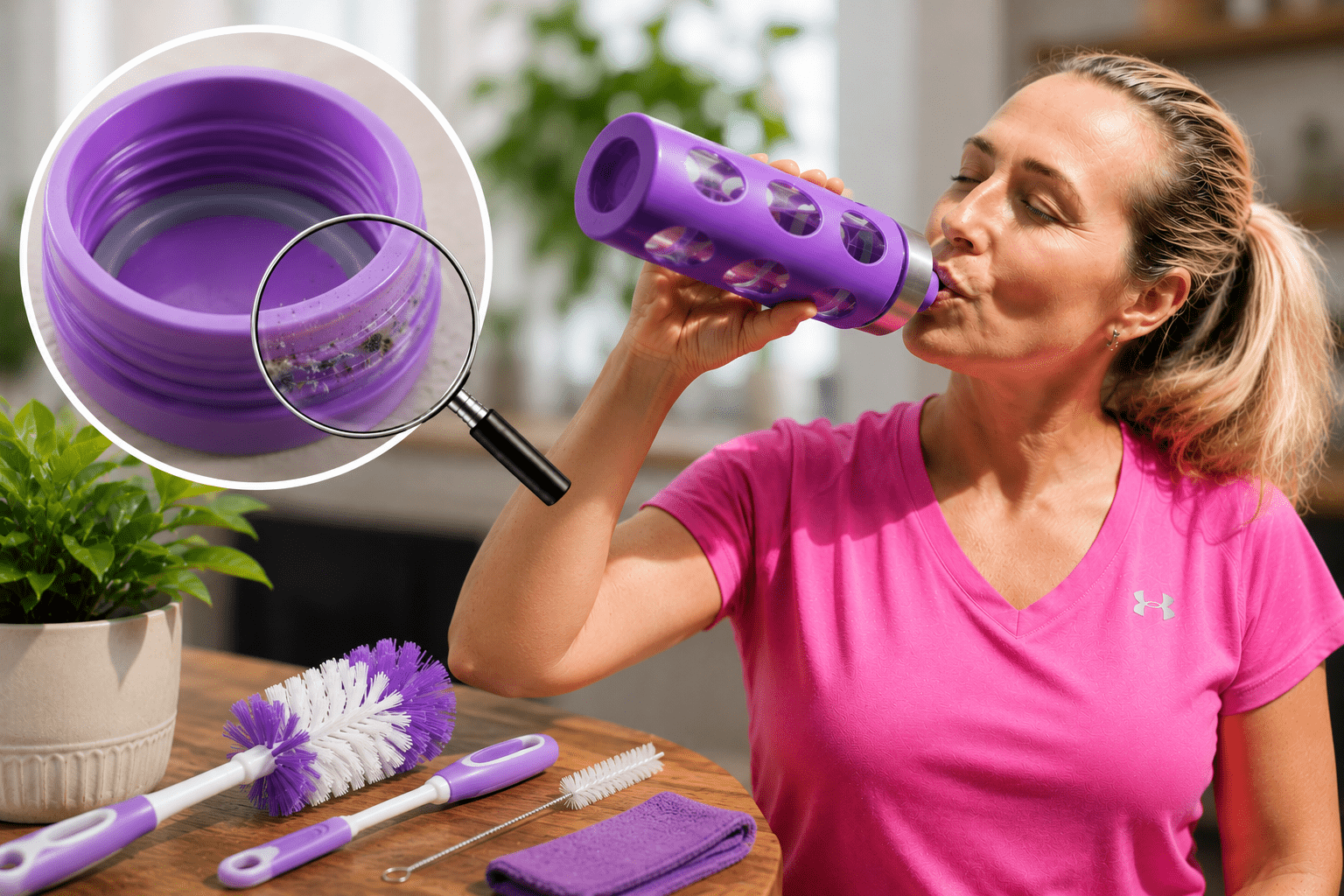
We all know that drinking enough water is one of the best things we can do for our health. But drinking from a dirty water bottle isn't healthy at all—and it could even contribute to a sore throat, coughing, or allergy-like symptoms.
The Hidden Problem Inside Your Bottle Lid
Many reusable water bottles have rubber seals, silicone rings, straws, or screw threads designed to create a watertight seal. Unfortunately, these tiny spaces are also perfect hiding places for mould, bacteria, and other microbes.
If your bottle:
- Sits in a warm car for days,
- Is left full of water in direct sunlight,
- Doesn't dry properly after washing,
- Remains in a damp dishwasher,
- Or only gets a quick rinse instead of a proper clean,
you're creating the perfect environment for unwanted growth.
Can Mould Make You Ill?
Yes, it can.
Apart from being rather unpleasant, mould can be harmful if inhaled or ingested. According to the CDC, exposure to mould may cause:
- A sore or irritated throat
- A blocked or runny nose
- Coughing or wheezing
- Burning or itchy eyes
- Skin irritation or rashes
People with asthma, allergies, weakened immune systems, or chronic lung conditions may be even more sensitive, and in some cases mould exposure can contribute to lung infections.
While occasional exposure is unlikely to cause serious problems in healthy individuals, regularly drinking from a mouldy bottle certainly isn't something we want to add to our wellness routine!
How to Clean a Mouldy Water Bottle Lid
The good news? You don't necessarily need to throw your bottle away.
Option 1: Bleach Solution
Place the lid and removable seals in a solution of:
10 parts warm water to 1 part household bleach.
Allow them to soak for around 10 minutes.
Afterwards:
- Wash thoroughly with hot, soapy water or place them in the dishwasher.
- Rinse well.
- Dry completely before reassembling.
If you don't have a dishwasher, empty the bleach solution, rinse the sink thoroughly, refill it with hot soapy water, and give everything a good scrub.
Option 2: Boiling Water
For stainless steel bottles and suitable lids:
- Bring a large pot of water to the boil.
- Submerge the bottle and lid for 10–15 minutes.
- Allow everything to cool safely before handling.
- Dry upside down where air can circulate freely.
Option 3: White Vinegar
If you'd rather avoid bleach:
- Fill the bottle with half distilled white vinegar and half water.
- Shake thoroughly.
- Leave overnight.
- Empty the solution and wash with hot, soapy water.
- Allow the bottle to dry completely before using it again.
The Golden Rule: Wash—Don't Just Rinse!
Simply swilling your bottle with cold water isn't enough.
To keep your bottle safe:
✔ Wash it daily with warm, soapy water.
✔ Take apart lids, straws, and rubber seals regularly.
✔ Allow everything to dry completely before putting it back together.
✔ Avoid leaving bottles in hot cars or direct sunlight for long periods.
✔ Never store a bottle with the lid tightly closed while it's still damp.
Glass and Stainless Steel Are Better Choices
While all bottles need cleaning, glass and stainless steel bottles tend to resist staining, odours, and microbial build-up better than plastic ones.
They are easier to clean thoroughly, last much longer, and mould is generally less likely to build up on their surfaces.
Your Fit2Shine Challenge Today!
Go and check your water bottle right now!
Take the lid apart.
Inspect the rubber seal.
Give it a proper wash—not just a quick rinse.
Your body works hard to stay hydrated. Make sure the water bottle helping you do that is just as healthy as the water inside it.
Now go and check your water bottle!
0 Comments