

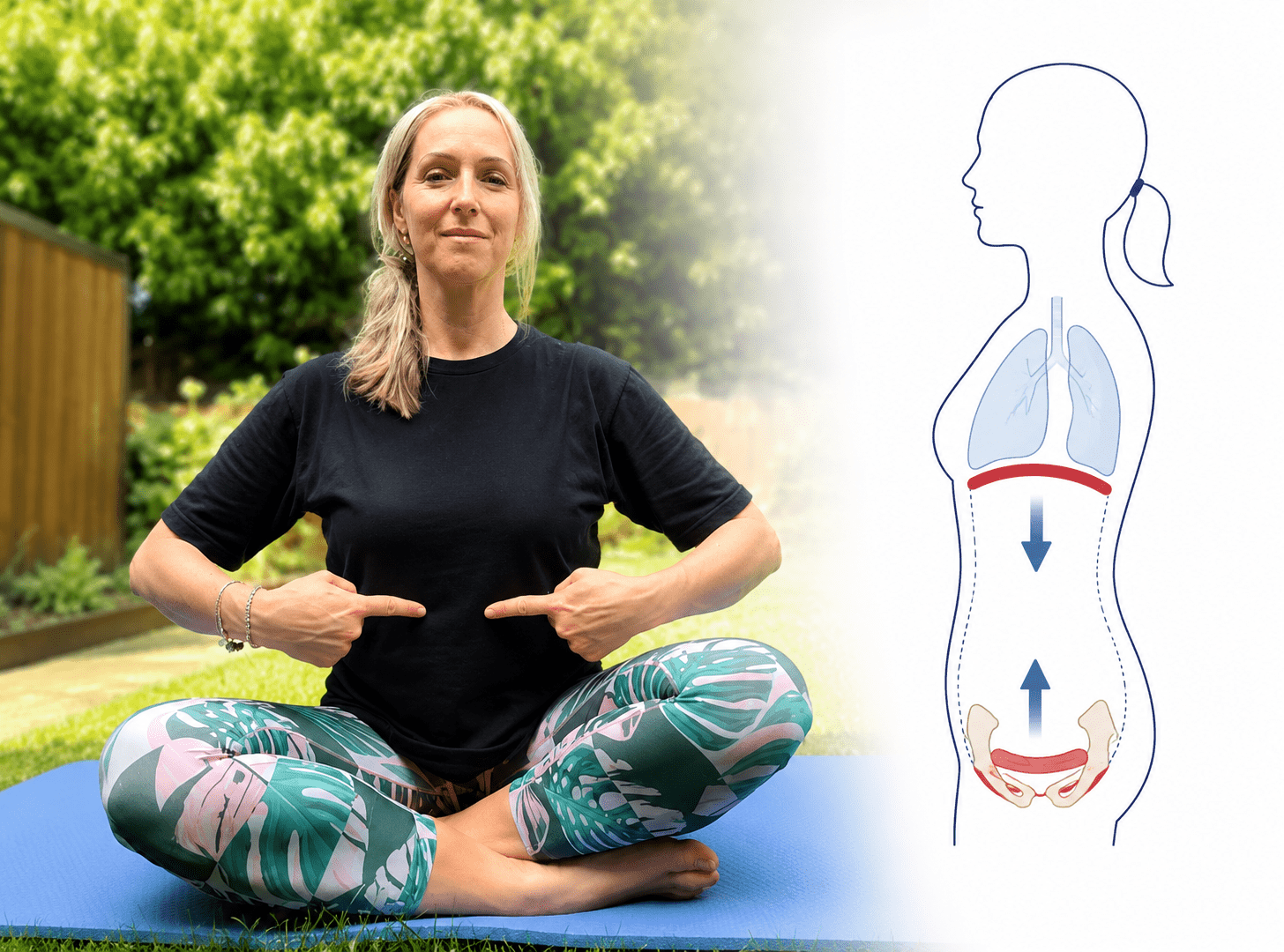
The diaphragm and pelvic floor are closely connected and work together as part of your body's natural pressure management system. Along with the deep abdominal muscles (transversus abdominis) and deep spinal muscles (multifidus), they form what is often referred to as the "core canister".
When these muscles work in harmony, they help support posture, spinal stability, breathing efficiency, movement, and pelvic floor function.
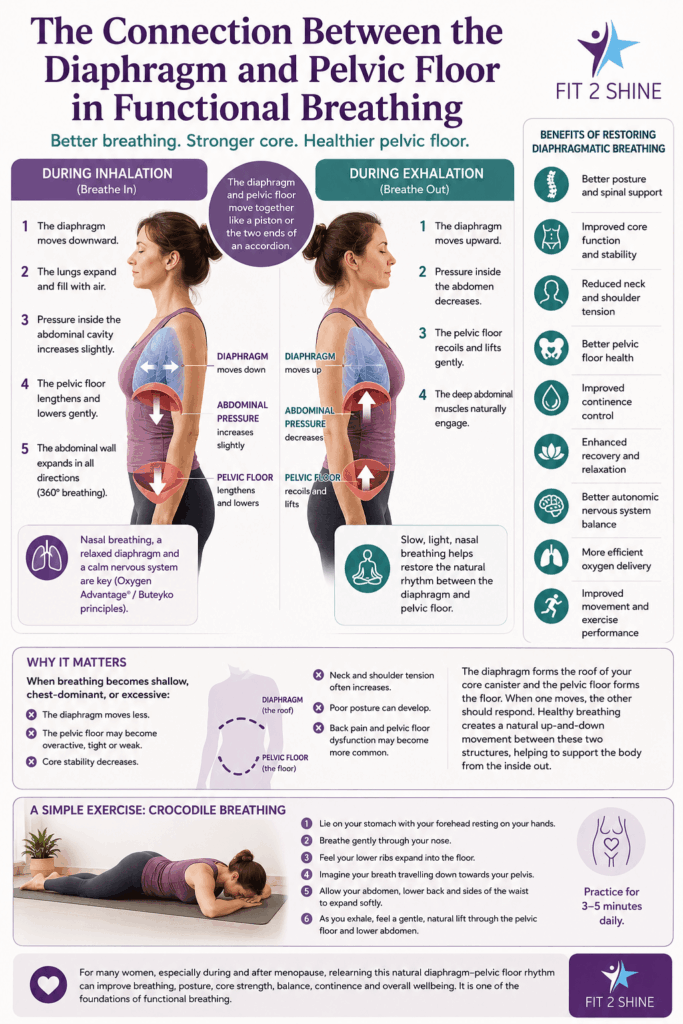
During Inhalation
When you breathe in correctly through your nose and allow your diaphragm to descend:
- The diaphragm moves downward.
- The lungs expand and fill with air.
- Pressure inside the abdominal cavity increases slightly.
- The pelvic floor responds by gently lengthening and lowering.
- The abdominal wall expands softly in all directions (360-degree breathing).
Think of the diaphragm and pelvic floor moving together like a piston or the two ends of an accordion.
During Exhalation
As you breathe out:
- The diaphragm relaxes and moves upward.
- Pressure inside the abdomen decreases.
- The pelvic floor gently recoils and lifts.
- The deep abdominal muscles naturally engage.
This coordinated movement helps maintain spinal stability, support the internal organs, and optimise breathing efficiency.
Why It Matters
When breathing becomes shallow and chest-dominant:
- The diaphragm moves less.
- The pelvic floor may become overactive, tight, or weak.
- Core stability decreases.
- Neck and shoulder tension often increases.
- Poor posture can develop.
- Back pain and pelvic floor dysfunction may become more common.
Over time, dysfunctional breathing patterns can affect not only breathing efficiency but also movement quality, balance, continence, and overall wellbeing.
Benefits of Restoring Diaphragmatic Breathing
✅ Stronger more efficiently working respiratory muscles
✅ Better posture and spinal support
✅ Improved core function and stability
✅ Reduced neck and shoulder tension
✅ Better pelvic floor health
✅ Improved continence control
✅ Enhanced recovery and relaxation
✅ Better autonomic nervous system balance
✅ More efficient oxygen delivery
✅ Improved movement and exercise performance
A Simple Exercise: Crocodile Breathing
- Lie on your stomach with your forehead resting on your hands.
- Breathe gently through your nose.
- Feel your lower ribs expand into the floor.
- Imagine your breath travelling down towards your pelvis.
- Allow your abdomen, lower back, and sides of the waist to expand softly.
- As you exhale, feel a gentle, natural lift through the pelvic floor and lower abdomen.
Practise for 3–5 minutes daily.
Final Thoughts
For many women, particularly during and after menopause, relearning the natural rhythm between the diaphragm and pelvic floor is very important.
Functional breathing is about much more than simply getting air into your lungs. It is about restoring the natural coordination between the diaphragm, pelvic floor, core muscles, and nervous system, creating a stronger, more resilient body from the inside out.
Crocodile breathing is absolutely amazing also for lower back .
Pelvic floor, diaphragm,functional breathing