


This Simple Exercise Is the Key to Stronger Bones.
For many women over 40, the idea of jumping workouts can feel intimidating—or even risky. Concerns about joint pain, injury, or simply not feeling as agile as in earlier years, believing that jumping is only for athletes or younger people, often lead to avoiding high-impact movements altogether.
While these concerns are valid, completely avoiding impact-based movement may mean missing out on one of the most effective ways to strengthen your bones.
Emerging fitness and health research suggests that a small amount of plyometric—jump-based—exercise may be exactly what the body needs to maintain, and even improve, bone density as we age.
Why Bone Health Matters More After 40
As women age, especially during and after menopause, bone density naturally declines. This change is largely due to hormonal shifts, particularly decreasing estrogen levels, which play a key role in maintaining bone strength.
Over time, this loss of density increases the risk of fractures and conditions such as osteoporosis.
While strength training and walking are commonly recommended—and absolutely beneficial—they may not fully address one critical factor in bone health: IMPACT.
Bones respond to stress. When you place healthy, controlled stress on them—like the force created during jumping—they adapt by becoming stronger. Without that stimulus, bones can gradually weaken over time.
The Surprising Power of Plyometrics
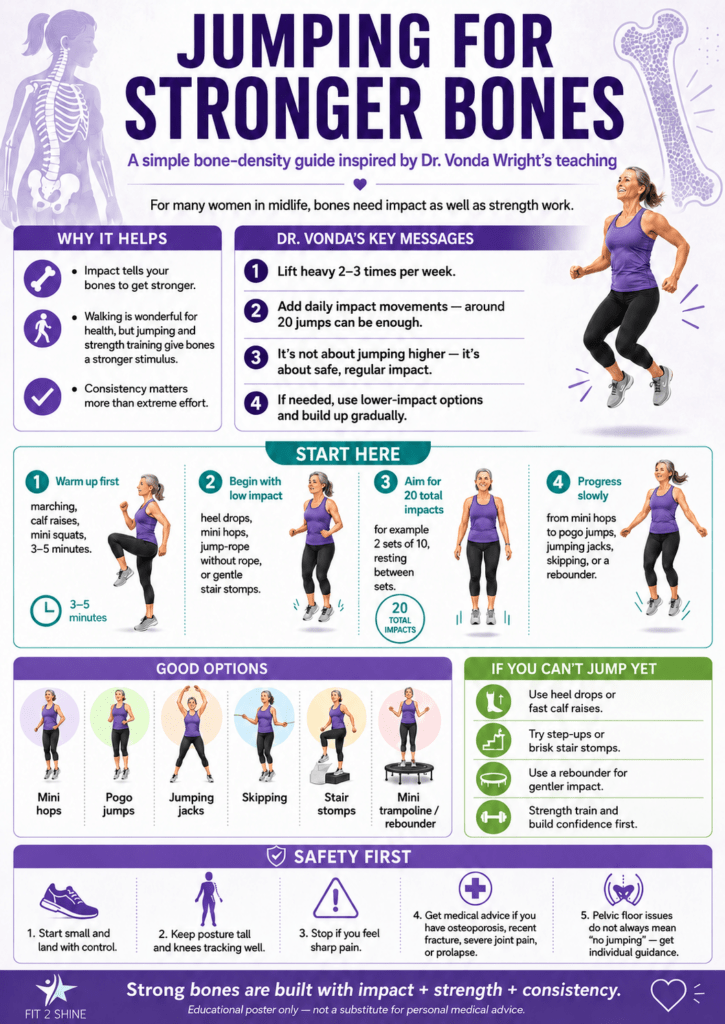
Plyometric exercises involve quick, explosive movements such as jumping, skipping hopping, or bounding. These movements create short bursts of force that signal the body to build stronger bones.
The encouraging news? You don’t need intense, high-volume workouts to see benefits.
You only need a small dose of plyometrics to reap the benefits.
Simple movements can be surprisingly effective, including:
- Feet stamping
- Heel raises with controlled but dynamic lowering
- Small hops in place
- Light skipping motions
These exercises create enough impact to stimulate bone growth without requiring elite athletic ability.
Making Jumping Safe and Accessible
The goal isn’t to jump higher or harder—it’s to jump smarter.
Here’s how to incorporate plyometric movement safely:
Start Small
Begin with low-impact variations such as mini hops or stepping off a low platform rather than jumping immediately.
Focus on Soft Landings
Landing with slightly bent knees helps absorb shock and reduces stress on joints and i still gives us impact.
Keep Volume Low
You don’t need long sessions. A few sets of 5–10 repetitions can provide meaningful benefits.
Build Gradually
As strength and confidence improve, increase intensity slowly rather than rushing progression.
Combine With Strength Training
Strong muscles support joints and help control movement during impact activities.
If you have existing injuries, joint pain, or medical conditions, consulting a healthcare provider or physical therapist before beginning is always a wise step.
It’s Never Too Late to Start
One of the most encouraging findings from bone health research is that bones remain responsive to impact training—even later in life.
You don’t need a lifetime of athletic experience to benefit. What matters most is consistency and proper progression.
Adding just a small amount of plyometric exercise into your weekly routine could play a meaningful role in:
- Maintaining independence
- Reducing fracture risk
- Supporting mobility and balance
- Preserving long-term bone health
Small changes, practiced consistently, often produce the most lasting results.
The Bottom Line
Jumping exercises aren’t just for younger athletes—they’re a powerful, accessible tool for women over 40 looking to protect their bone health.
With just a few minutes each week, you can introduce the kind of stimulus your bones need to stay strong.
Sometimes, the simplest movements—like feet stamping, heel raises with controlled but dynamic lowering, or small hops—can have the biggest impact.
And if you’re worried about getting started, consider speaking with an experienced coach or physiotherapist to ensure you’re moving safely and confidently.
Great to read all about exercises and to remind me why I need to keep doing them
Women are also often wary of jumping, due to pelvic floor weakness resulting in stress incontinence. It’s important that you can relax and enjoy and benefit from exercise without worrying about “oops” moments. Wear a Tena Lady (other brands available!). They work – I know! And since menopause, stress incontinence has rarely been an issue.